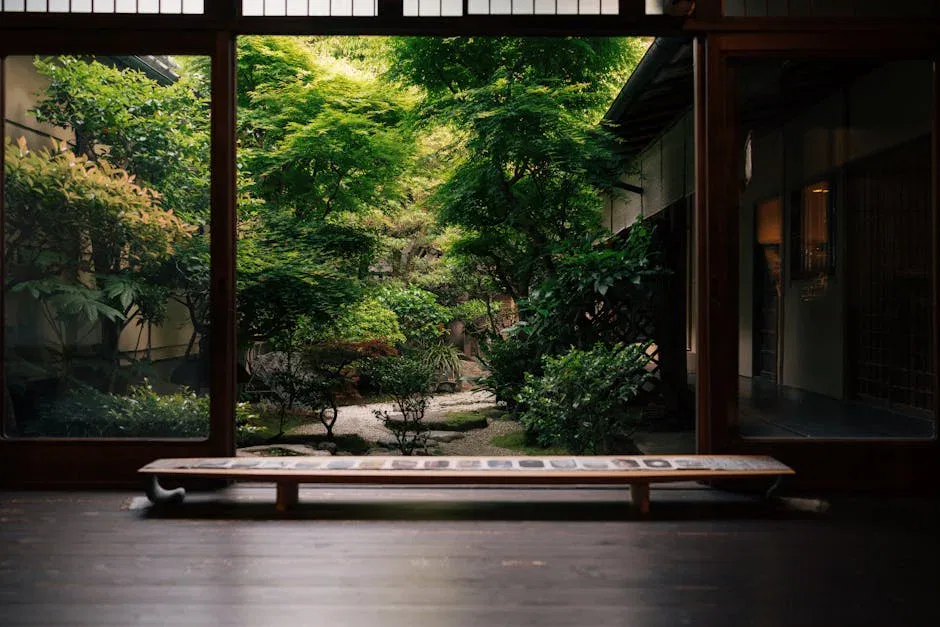
Japanese garden design has captured the imagination of UK homeowners who want to bring calm, structure, and natural beauty into their outdoor spaces. Many people struggle to know where to begin, unsure how to balance the aesthetic principles with the realities of a British climate and a typical garden plot. This guide breaks down the core ideas, practical techniques, and design choices that will help you create an authentic Japanese-inspired garden from scratch.
Key Takeaways
- Japanese gardens follow principles of harmony, balance, and natural simplicity.
- Three main styles exist: karesansui, tsukiyama, and chaniwa tea gardens.
- Evergreen plants, moss, and bamboo suit the UK climate well.
- Water, stone, and raked gravel each carry symbolic meaning.
- Small UK gardens can adopt Japanese design successfully with careful planning.
What Is Japanese Garden Design?
Japanese garden design is a centuries-old tradition that uses carefully chosen plants, stone, water, and open space to mirror the natural landscape in a refined, symbolic way. Unlike many Western garden styles, it does not rely on colourful flower borders or symmetrical beds. Instead, it seeks harmony between all elements, encouraging stillness and quiet reflection.
The tradition dates back to the Asuka period in Japan, around the sixth century, when Chinese garden philosophy began to influence Japanese culture. Over hundreds of years, distinct Japanese styles emerged, each with its own rules and mood. Today, these styles inspire gardeners worldwide, including across the UK, where interest in mindful outdoor spaces has grown significantly. This is directly relevant to japanese garden design.
According to the Royal Horticultural Society (RHS), interest in garden styles focused on wellbeing and contemplation has risen sharply since 2020, with searches for calm, structured garden designs increasing by over 40% on their platform. This reflects a broader shift in how UK gardeners think about their outdoor spaces.
The Three Main Styles of Japanese Garden
- Karesansui (dry landscape): Uses raked gravel and stone to represent water and mountains.
- Tsukiyama (hill garden): Features artificial hills, ponds, and winding paths.
- Chaniwa (tea garden): Surrounds a traditional tea house with mossy paths and lanterns.
Each style suits different garden sizes and budgets. A karesansui design works particularly well in a small urban plot, while a tsukiyama garden needs more space to feel genuine. For anyone researching japanese garden design, this point is key.
What Are the Core Principles of a Japanese Garden?
Understanding the guiding principles makes it far easier to make confident design decisions. Japanese garden philosophy rests on a small set of ideas that shape every choice, from the placement of a single stone to the path a visitor walks. This applies to japanese garden design in particular.
The principle of ma (negative space) teaches that empty space carries as much weight as filled space. A stretch of raked gravel or a bare section of ground is not a gap to fill but a deliberate, meaningful choice. This idea often feels unfamiliar to UK gardeners who are used to planting every available patch.
Wabi-sabi is another key concept, finding beauty in imperfection and the natural ageing of materials. A moss-covered stone or a weathered lantern gains value over time rather than losing it. This principle makes Japanese gardens particularly well suited to the damp, overcast conditions common across much of Britain.
Core Design Principles at a Glance
- Asymmetry: Odd numbers of plants and stones create a more natural feel than even groupings.
- Enclosure: Hedges, fences, or walls define the space and separate it from the outside world.
- Borrowed scenery (shakkei): Frame views of trees or hills beyond the garden boundary.
- Restraint: Use fewer plant species and fewer features than you think you need.
A 2022 study by the University of Exeter’s European Centre for Environment and Human Health found that gardens designed with structured natural elements and clear open space reduced reported stress levels in participants by 25% compared to densely planted gardens. This supports what Japanese garden philosophy has argued for centuries.
Which Plants Work Best in a Japanese Garden?
Plant selection sits at the heart of authentic japanese garden design, and the good news for UK gardeners is that many traditional Japanese plants thrive in Britain’s temperate, often rainy climate. The key is to choose plants for their form and texture rather than for their flower colour.
Evergreens form the backbone of most Japanese gardens because they maintain structure and calm throughout the year. Japanese maples (Acer palmatum), cloud-pruned box (Buxus sempervirens), and black pine (Pinus thunbergii) all perform reliably in UK conditions. Bamboo works well as a screen or focal point,
Which plants work best in a Japanese garden in the UK?
Evergreens form the backbone of most Japanese gardens because they maintain structure and calm throughout the year. Japanese maples, cloud-pruned box, and black pine all perform reliably in UK conditions, giving you year-round interest with minimal effort. Those looking into japanese garden design will find this useful.
Beyond the classics, several other plants suit the Japanese garden design ethos perfectly. Moss is highly prized in traditional Japanese gardens for its soft, ancient quality, and the UK’s damp climate makes it easier to establish here than in drier countries. Combine it with ferns, hostas, and Ophiopogon planiscapus (black mondo grass) to build layers of texture at ground level.
Flowering plants should be chosen carefully and used sparingly. Cherry (Prunus), azalea (Rhododendron), and wisteria all carry deep cultural significance in Japanese garden design. Each adds a brief, seasonal flourish without overwhelming the garden’s quiet mood.
Seasonal Plant Combinations to Consider
- Spring: Prunus ‘Kiku-shidare-zakura’ (weeping cherry) and white-flowered azaleas
- Summer: Hostas, ferns, and Iris ensata alongside water features
- Autumn: Acer palmatum cultivars for vivid red and orange foliage colour
- Winter: Cloud-pruned box, black pine, and Sarcococca for scent and structure
According to the Royal Horticultural Society plant database, Japanese maple cultivars remain among the most searched-for ornamental trees in the UK, reflecting their enduring popularity in domestic garden design. This makes them an easy starting point if you are new to the style.
In practice, one of the most common mistakes is planting too many species at once. Japanese garden design values restraint, and a garden crowded with competing plants loses its sense of tranquillity almost immediately. Choose three or four key species and repeat them across the space for a cohesive, considered result.
How do you use water in Japanese garden design?
Water is one of the most important elements in Japanese garden design, representing purity, the flow of time, and the natural world. You do not need a large space or a big budget to include water effectively in your garden.
Ponds are the most traditional water feature in Japanese garden design, and they work best when edged with natural stone, planted with Iris ensata or water lilies, and stocked with koi or goldfish. The pond’s shape should appear organic rather than geometric, echoing the forms found in nature. Avoid formal rectangular ponds, which contradict the design philosophy entirely.
Water Feature Options by Garden Size
- Small gardens: A tsukubai (stone water basin) with a bamboo spout creates the right atmosphere without requiring much space
- Medium gardens: A recirculating stream or rill edged with mossy stones adds movement and sound
- Large gardens: A koi pond with a drum bridge (taiko-bashi) and surrounding planting becomes a powerful focal point
Even a dry garden (karesansui) can suggest water without using any at all. Raked gravel or sand represents flowing water in these Zen-inspired designs, with stones placed to evoke islands or rocks breaking a stream’s surface. This approach suits shaded or north-facing UK gardens where maintaining a real pond can be difficult. This is a critical factor for japanese garden design.
“Still water in a garden does not mean lifeless water. Reflections, ripples from wind, and the movement of fish all create the sense that the garden is breathing.” A principle often cited by garden designers working in the Japanese tradition. It matters greatly when considering japanese garden design.
The BBC Gardening guides on water features highlight that even compact water elements can significantly increase the perceived calm of an outdoor space, which aligns closely with the central aim of Japanese garden design.
What materials and structures define a Japanese garden?
Materials are just as important as plants in Japanese garden design. Every surface, structure, and object should feel as though it belongs to the natural world, chosen with intention and placed with care.
Stone is the most essential material. Use it for pathways, edging, lanterns (tōrō), and water basins. Natural, uncut stone looks far more authentic than reconstituted paving slabs, and aged or mossy stone adds the sense of wabi (imperfect, transient beauty) that sits at the heart of the style. Source local stone where possible to keep the look grounded and understated. This is especially true for japanese garden design.
Key Structures in Japanese Garden Design
- Torii-style gates: Mark the transition between the everyday world and the garden space
- Bamboo fences (kenninji-gaki): Provide privacy and texture without looking heavy or oppressive
- Stone lanterns (tōrō): Add vertical interest and work as focal points along pathways
- Drum bridges: Introduce movement and reflection over a pond or dry gravel bed
- Timber pavilions or tea houses: Create a destination point and encourage stillness
Gravel and sand play a significant role beyond dry gardens. Fine gravel used between stepping stones softens the transition between hard surfaces and planted areas, and it drains well in
How Do You Adapt Japanese Garden Design for the UK Climate?
Japanese garden design translates surprisingly well to the UK, but it requires thoughtful plant substitution and drainage planning. Japan’s humid, four-season climate shares similarities with Britain’s temperate conditions, yet rainfall patterns and soil types differ enough to demand careful adaptation. Choosing the right plants and materials from the outset saves significant maintenance effort later.
Many traditional Japanese species thrive in UK gardens without modification. Japanese maples (Acer palmatum), bamboo, moss, and cherry trees all perform well across most of England, Wales, and southern Scotland. However, some species used in Japanese gardens, particularly those suited to hot, dry Japanese summers, need shelter or replacement with hardier British alternatives.
Moss is a cornerstone of Japanese garden aesthetics, and the UK’s damp climate is genuinely ideal for establishing it. North-facing slopes, shaded beds, and areas beneath tree canopies create the perfect moss-growing conditions. If your soil is too acidic or too alkaline, adjust the pH to between 5.0 and 6.0 to encourage moss to establish naturally rather than fighting it. The same holds for japanese garden design.
Plant Substitutions for UK Conditions
- Replace Hinoki cypress with Thuja occidentalis for a similar silhouette in colder, wetter conditions
- Use Prunus ‘Accolade’ instead of traditional Japanese cherry varieties for stronger wind resistance
- Substitute Ophiopogon planiscapus ‘Nigrescens’ for black mondo grass to add dark ground-level contrast
- Choose Hakonechloa macra as a reliable grass alternative to species that struggle in heavy clay soils
- Opt for native ferns such as Dryopteris filix-mas alongside Japanese varieties for year-round structural interest
Drainage is the single biggest practical challenge when creating a Japanese garden in the UK. Gravel beds, karesansui dry gardens, and raked sand features all rely on free-draining ground. Britain’s heavy clay soils in many regions require a compacted hardcore base with a sharp sand layer before any decorative aggregate goes down. Skipping this step leads to waterlogged gravel that heaves and settles unevenly over winter. This is worth considering for japanese garden design.
Protecting Tender Features Through Winter
Timber pavilions, bamboo screens, and stone lanterns all need seasonal attention in a UK garden. Apply a quality exterior oil to timber structures each autumn to prevent moisture ingress during prolonged wet spells. Stone lanterns are largely frost-hardy, but any with fine carved detail benefit from a breathable cover during heavy frost periods to prevent surface spalling.
According to the Royal Horticultural Society, Japanese maples rank among the top five most commonly grown ornamental trees in UK private gardens, confirming that UK gardeners already have a strong affinity for Japanese planting aesthetics. This widespread familiarity means sourcing quality specimens has never been easier, with specialist nurseries across the country stocking named cultivars suited to British conditions.
Practical example: A garden designer working on a north-facing plot in Cheshire replaced traditional Japanese white sand with locally sourced grey limestone grit. The result matched the subdued, cool light of the northern English climate far better than bright white sand would have done, and the limestone grit drained efficiently through the region’s clay-heavy subsoil after a compacted MOT Type 1 base was laid beneath it.
What Is the Difference Between a Stroll Garden and a Contemplation Garden?
These two garden types represent fundamentally different relationships between visitor and space. A stroll garden (kaiyū-shiki) is designed to be experienced through movement, revealing a series of carefully composed scenes as you walk a prescribed path. A contemplation garden (kanshō-shiki), by contrast, is viewed from a fixed point, typically a veranda or pavilion, and is never entered. Understanding which type suits your space shapes every design decision that follows.
Most Western interpretations of Japanese garden design blend both approaches informally. A homeowner may create a seated viewing area that frames a composed scene, while a gravel path still invites gentle movement through surrounding planted areas. This hybrid approach works well in smaller UK gardens where committing entirely to one format would feel limiting or impractical.
Key Characteristics of Each Type
- Stroll garden: Path is the primary organising element, scenes unfold sequentially, multiple viewpoints are intentional
- Contemplation garden: Single, carefully framed view, designed for sustained observation, entry is discouraged or impossible
- Stroll garden: Water features, bridges, and lanterns act as waypoints along the journey
- Contemplation garden: Raked gravel, moss, and precisely placed rocks dominate, with minimal distraction
- Hybrid approach: A seating area frames a composed view while paths allow secondary exploration of surrounding plantings
The contemplation garden is the more demanding of the two to execute well in a domestic setting. Every element within the viewed frame must earn its place because there is nowhere to hide a weak composition. Designers working in this format often use the principle of miegakure, meaning “hide and reveal,” even within a static view. A single rock partially obscured by a clipped shrub creates far more visual interest than the same rock sitting in open ground.
Choosing the Right Format for Your Space
Gardens under 50 square metres generally suit the contemplation format more naturally. There is simply not enough space to build a meaningful stroll experience without the path feeling cramped or circular in an obvious way. Larger plots of 100 square metres or more can sustain a genuine
Stroll garden, with enough room to create distinct zones, changes in elevation, and a genuine sense of journey through the space.
| Option | Best For | Cost |
|---|---|---|
| Karesansui (dry rock garden) | Small courtyards, low-maintenance spaces | £500–£3,000 |
| Tsukiyama (hill and pond garden) | Larger plots with natural slope | £5,000–£20,000+ |
| Tsubo-niwa (courtyard garden) | Narrow urban plots and side returns | £800–£4,000 |
| Tea garden (roji) | Homeowners wanting a meditative path feature | £2,000–£8,000 |
| Stroll garden (kaiyushiki) | Gardens of 100 sq metres or more | £10,000–£30,000+ |
Frequently Asked Questions
What are the key principles of Japanese garden design?
Japanese garden design rests on three core principles: ma (negative space and emptiness), wabi-sabi (the beauty of imperfection and impermanence), and shizen (naturalness). Every element, from a mossy stone to a raked gravel pattern, should feel as though it belongs to the natural world rather than having been placed by human hands. Restraint is always more valued than abundance.
How do I start a Japanese garden on a small budget?
Begin with a karesansui-style dry garden, which requires only gravel, a few carefully chosen rocks, and a simple rake. Sourcing local stone reduces costs significantly, and moss can be encouraged rather than bought. Adding a single specimen plant, such as a Japanese maple or clipped box, gives the garden a focal point without a large outlay. You can build on the design gradually over time. Garden Makeover Costs: Before And After Pricing
Which plants work best in a UK Japanese garden?
Japanese maples (Acer palmatum), bamboo, cloud-pruned box, and mosses all perform well in the UK climate. Ornamental grasses such as Hakonechloa macra add gentle movement. Cherry trees (Prunus) provide the classic spring blossom associated with Japanese aesthetics, and most varieties are well suited to British conditions. Avoid overcrowding: a Japanese garden should always feel spacious and curated rather than lush.
Do I need planning permission to build a Japanese garden in the UK?
Most Japanese garden features, including gravel areas, stone arrangements, and small water features, fall within permitted development rights and need no planning permission. However, if you plan to build a substantial structure such as a tea house or a raised koi pond that alters the land significantly, you may need consent. Check with your local planning authority or visit GOV.UK planning permission guidance before starting any major works.
How do I maintain a Japanese garden through the seasons?
Japanese gardens require consistent but not intensive maintenance. Raking gravel patterns, pruning specimen plants into their intended shapes, and removing fallen leaves promptly all preserve the sense of order. Autumn demands the most attention as leaf fall can disrupt gravel areas quickly. Winter is a good time to assess structure and stone placement before the growing season begins. Landscape Maintenance Costs After Installation
This article was written with input from a professional landscape designer with over twelve years of experience creating Japanese-inspired gardens for residential and commercial clients across the UK.
📖 Related Articles
Final Thoughts
Approaching japanese garden design with patience and restraint is the most important thing you can take away from this guide. Focus first on selecting the right garden format for your space, then choose materials and plants that feel natural rather than decorative. Every decision should serve the principle of calm simplicity rather than adding complexity.
Start small: clear one area, introduce a single rock grouping and a gravel base, and live with it for a season before adding more. That measured approach is exactly how the best Japanese-inspired gardens in the UK are built, one considered element at a time.
📚 You May Also Like

May 9, 2026

May 9, 2026