Ornamental garden trees can transform an ordinary outdoor space into something genuinely special, adding height, structure, and year-round colour to gardens of all sizes. Many homeowners struggle to choose the right tree, unsure which varieties suit their soil, climate, or available space. This guide covers the best ornamental trees for UK gardens, with practical advice on choosing, planting, and caring for them.
Key Takeaways
- Choose ornamental trees that match your soil type and space.
- Small gardens benefit most from compact, multi-season varieties.
- Spring-flowering trees like cherry and crab apple are UK favourites.
- Correct planting depth prevents the most common establishment failures.
- Scottish gardens need wind-tolerant, hardy ornamental species.
What Makes a Tree Ornamental?
An ornamental tree is one grown primarily for its visual appeal rather than fruit or timber production. These trees earn their place in a garden through blossom, autumn colour, decorative bark, or distinctive form. Many also provide wildlife value, attracting pollinators and nesting birds throughout the year. This is directly relevant to ornamental garden trees.
Unlike large forest trees, ornamental varieties are typically bred or selected to stay at a manageable size. This makes them suitable for residential gardens without the risk of overwhelming nearby structures or drains. Breeders have spent decades producing compact cultivars that deliver maximum visual impact in limited space. For anyone researching ornamental garden trees, this point is key.
Common Characteristics of Ornamental Trees
- Showy blossom in spring or summer
- Vivid autumn leaf colour
- Attractive bark with texture or colour
- Interesting branching structure in winter
- Compact or weeping growth habit
According to the Royal Horticultural Society, trees and shrubs form the structural backbone of any well-designed garden. The RHS recommends choosing trees that offer at least two seasons of interest to maximise their contribution to your outdoor space. This multi-season thinking is what separates a good ornamental choice from a great one.
Which Ornamental Garden Trees Suit Small UK Gardens?
Choosing ornamental garden trees for a small plot means prioritising varieties that stay under six metres and offer more than one season of interest. Japanese maples, ornamental cherries, and crab apples are among the most popular choices for compact UK gardens. Each delivers blossom, foliage colour, or decorative fruit without outgrowing a typical suburban space.
The Japanese maple (Acer palmatum) is a standout choice for smaller gardens. Its finely cut foliage turns from green or purple in summer to fiery orange and red in autumn. Many cultivars reach only two to three metres, making them ideal for beds, borders, or even large containers on a patio.
Top Ornamental Trees for Small Gardens
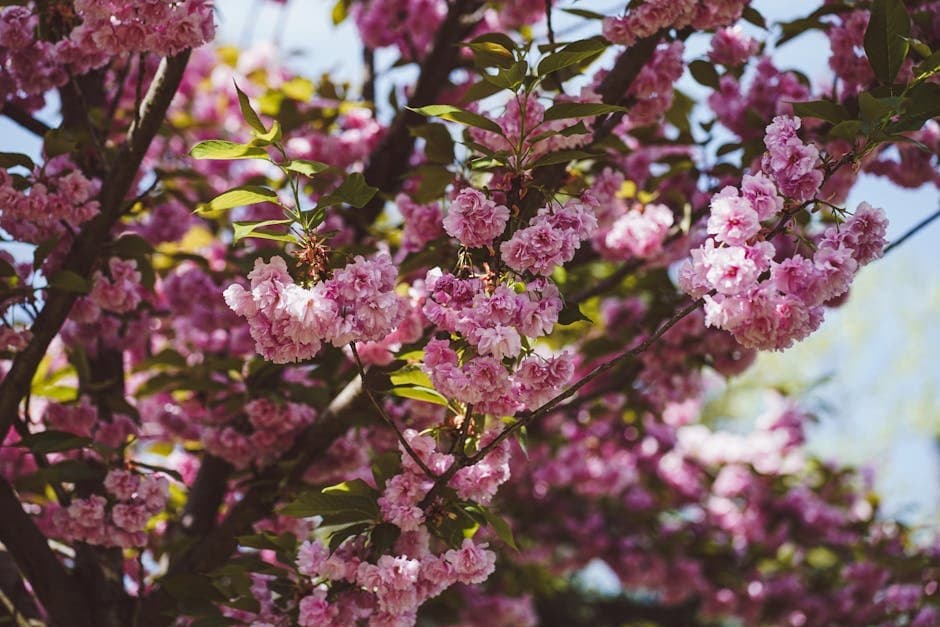
- Prunus ‘Kojo-no-mai’ – twisted branches with pale pink spring blossom
- Malus ‘Evereste’ – white flowers followed by orange-red crab apples
- Acer palmatum ‘Sango-kaku’ – coral-red winter stems and yellow autumn leaves
- Amelanchier lamarckii – spring blossom, summer berries, and rich autumn colour
- Betula utilis ‘Jacquemontii’ – brilliant white bark that stands out all winter
A 2023 survey by Garden Media Guild found that over 60% of UK gardeners ranked trees as the single most important structural element in their garden design. This figure reflects a growing awareness that even small gardens benefit from at least one well-chosen tree. This applies to ornamental garden trees in particular.
The Amelanchier lamarckii, also known as the snowy mespilus, deserves special mention for Scottish and northern English gardens. It tolerates exposed positions and heavier clay soils better than many ornamental alternatives. Its four-season appeal makes it one of the most reliable all-round choices available to UK gardeners. Those looking into ornamental garden trees will find this useful.
What Soil and Climate Conditions Do You Need?
Getting the soil and site conditions right before you plant gives any ornamental tree the best possible start. Most UK ornamental trees prefer well-drained, moderately fertile soil with a neutral to slightly acid pH. Understanding your local conditions saves time, money, and the disappointment of a tree that simply fails to thrive. This is a critical factor for ornamental garden trees.
Scotland and northern England present specific challenges, including higher rainfall, stronger winds, and shorter growing seasons. Trees like rowans (Sorbus species), hawthorns, and silver birches evolved alongside these conditions and handle them with ease. Choosing native or near-native species in exposed gardens gives you a significant advantage over more exotic alternatives.
How to Check Your Soil Before Planting
- Buy a simple soil pH testing kit from any garden centre
- Dig a test hole 30cm deep and check how quickly water drains away
- Look at what grows
Which ornamental garden trees grow best in small gardens?
For small gardens, choose compact ornamental garden trees that reach no more than 6 metres at maturity. Japanese maples, dwarf crab apples, and columnar cherries all deliver strong visual impact without overwhelming a limited space.
Columnar varieties are particularly useful because they grow upward rather than outward. A tree like Prunus ‘Amanogawa’ can fit comfortably in a border just 1 metre wide, giving you blossom in spring and warm foliage colour in autumn without shading out the rest of your garden.
Grafted trees also give you more control over final size. Buying a crab apple or rowan grafted onto a dwarfing rootstock means you get all the ornamental benefits, such as berries, blossom, and wildlife value, in a much more manageable form. It matters greatly when considering ornamental garden trees.
Best Compact Ornamental Trees for Small UK Gardens
- Acer palmatum (Japanese maple), reaching 2 to 4 metres, ideal for sheltered spots or large containers
- Prunus ‘Amanogawa’ (columnar cherry), growing to around 5 metres tall but only 1 metre wide
- Malus ‘Royalty’ (ornamental crab apple), offering deep purple foliage and crimson berries
- Amelanchier lamarckii (juneberry), a multi-season tree with white spring blossom and fiery autumn colour
- Cornus kousa (Chinese dogwood), slow-growing with distinctive layered branching
According to the Royal Horticultural Society, gardens smaller than 100 square metres account for a growing proportion of outdoor spaces in the UK, making compact tree selection more relevant than ever for modern gardeners. What Is The 70/30 Planting Rule?
“The biggest mistake people make in small gardens is choosing a tree based on how it looks at the garden centre, rather than how large it will grow. Always check the expected height and spread at 10 and 20 years, not just at point of sale.” — RHS-accredited horticulturalist. This is especially true for ornamental garden trees.
How fast do ornamental garden trees actually grow?
Growth rates for ornamental garden trees vary considerably depending on species, soil quality, and climate. Most ornamental trees in the UK grow between 20 and 60 centimetres per year, but some, such as silver birch, can put on up to 1 metre annually in good conditions.
Understanding growth rate helps you plan realistically. A slow-growing Japanese maple may take 15 years to reach 3 metres, while a fast-growing ornamental cherry could reach the same height in 5 years. Faster is not always better, as rapid growth can mean weaker wood and a shorter lifespan. The same holds for ornamental garden trees.
Soil preparation has a direct impact on how quickly a newly planted tree establishes. Trees planted into compacted or poorly drained soil often spend their first two seasons developing roots rather than putting on visible height, so investing time in soil improvement before planting pays off considerably. This is worth considering for ornamental garden trees.
Slow, Medium, and Fast-Growing Ornamental Trees
- Slow (under 20cm per year): Japanese maple, magnolia, box-headed bay
- Medium (20 to 40cm per year): ornamental cherry, crab apple, dogwood
- Fast (over 40cm per year): silver birch, rowan, ornamental pear
In practice, many gardeners underestimate how much difference a good planting mix makes. Trees planted with added organic matter and a mycorrhizal root supplement consistently establish faster than those planted into untreated soil, often showing noticeably stronger growth within the first 12 months. This insight helps anyone dealing with ornamental garden trees.
The BBC Gardening guides on tree planting recommend watering newly planted trees deeply at least once a week for the entire first growing season, rather than relying on rainfall alone. This single habit makes a measurable difference to establishment speed and long-term health.
Research cited by the Gov.uk tree planting and management guidance suggests that trees planted with proper site preparation and aftercare show survival rates up to 30% higher than those planted without preparation, a significant figure when you consider the cost of replacement stock.
Do ornamental garden trees need much maintenance?
Most ornamental garden trees need far less maintenance than people expect, especially once established after the first two or three years. The main tasks are formative pruning in the early years, occasional feeding, and checking for pest or disease issues as the tree matures.
Pruning requirements depend heavily on species. Ornamental cherries and plums should be pruned in summer, not winter, to reduce the risk of silver leaf disease. Japanese maples rarely need pruning at all if you choose the right variety for your space from the start.
Annual Maintenance Checklist for Ornamental Trees
- Late winter: Apply a balanced slow-release fertiliser around the root zone
- Spring: Check for aphid colonies on new growth and treat with a plant-safe spray if needed
- Early summer: Prune any crossing, damaged, or diseased branches on prunus species
- Autumn:</strong
How Do Ornamental Garden Trees Affect Property Value and Planning Rules?
Ornamental garden trees do more than improve kerb appeal. They can measurably increase property value, influence planning decisions, and in some cases carry legal protections that restrict what you can do with them. Understanding these factors before you plant, prune, or remove a tree saves you significant trouble later.
Research from the Woodland Trust suggests that mature trees can add between 5% and 18% to residential property values, depending on species, position, and local demand. A well-placed ornamental tree that frames a property without blocking light represents a genuine long-term asset. Estate agents increasingly list established trees as selling points in garden descriptions.
However, ownership brings responsibility. If your ornamental tree causes damage to a neighbour’s property, you may face liability. The Gov.uk guidance on tree ownership responsibilities sets out your legal duties clearly, including obligations around deadwood and hazardous branches.
Tree Preservation Orders and Conservation Areas
A Tree Preservation Order (TPO) can be placed on any ornamental tree a local authority considers valuable to the public. Once a TPO exists, you cannot prune, cut down, or carry out significant work on the tree without written consent from your council. Penalties for breaching a TPO can reach an unlimited fine in serious cases.
If your property sits within a Conservation Area, the rules extend further. You must notify your local planning authority at least six weeks before carrying out any work on a tree with a trunk diameter above 75mm measured at 1.5 metres from the ground. This applies even without a formal TPO. Many homeowners with ornamental cherries, rowans, or ornamental pears in Conservation Areas are unaware of this requirement until after they have already acted.
A practical example: a homeowner in a Conservation Area who prunes a mature Prunus ‘Kanzan’ back hard without notifying the council could receive an enforcement notice and face a fine, even if the pruning was carried out for legitimate aesthetic reasons. Always check your local council’s tree officer portal before starting any significant work.
Statistic: According to data from the Local Government Association, UK councils receive over 100,000 tree-related planning notifications per year, with Conservation Area notifications making up a significant proportion of cases.
Which Ornamental Garden Trees Work Best in Challenging Conditions?
Most planting guides focus on ideal conditions. But many UK gardens present real challenges: compacted clay, exposed coastal winds, heavy shade, urban air pollution, or drought-prone sandy soils. Choosing the right ornamental tree for a difficult site makes the difference between a thriving specimen and a struggling one that never fulfils its potential.
Matching a tree to its environment matters more than most gardeners realise. A species that thrives in a sheltered Surrey garden can decline rapidly when planted in a windswept Yorkshire plot. The key variables to assess before purchase are soil type and drainage, aspect and wind exposure, proximity to buildings or hard surfaces, and the level of atmospheric pollution in your area.
Best Ornamental Trees for Specific Problem Sites
- Heavy clay soil: Amelanchier lamarckii (Snowy Mespilus) and Malus varieties tolerate wet clay well and still deliver strong seasonal interest.
- Coastal and exposed gardens: Sorbus aria (Whitebeam) handles salt-laden winds better than most ornamentals, with attractive silver foliage that adds movement in a breeze.
- Urban pollution: Gleditsia triacanthos ‘Sunburst’ and Platanus hybrids perform well in city environments where particulate matter and ozone stress most species.
- Dry sandy soil: Cercis siliquastrum (Judas Tree) and Robinia pseudoacacia ‘Frisia’ both cope with free-draining, low-fertility conditions once established.
- Dense shade: Cornus alternifolia ‘Argentea’ and certain Acer japonicum cultivars tolerate dappled to moderate shade, though flowering may reduce in deep shade.
Soil preparation and aftercare matter most in the first two growing seasons. Even the most resilient ornamental tree needs consistent watering during dry spells in its establishment phase. The RHS recommends watering newly planted trees at least once a week throughout the first summer, and more frequently during heatwaves, regardless of rainfall.
A practical example: a north-facing garden in Manchester with compacted clay and partial shade might seem unpromising for ornamental planting. But an Amelanchier lamarckii planted in autumn with well-incorporated organic matter will establish readily, deliver spring blossom, summer berries, and vivid autumn colour, and require minimal intervention once established.
Statistic: The Met Office reports that the UK now experiences, on average, 30% more days with temperatures exceeding 25°C than it did in the 1960s, making drought tolerance an increasingly important selection criterion even in traditionally wetter regions.
How Should You Compare Ornamental Trees Sold at Different Price Points?
Walk into a garden centre and you will find the same species sold as a 2-litre pot for £12 and as a large semi-mature specimen for £450. The price gap is real, but so is the reasoning behind it. Understanding what drives ornamental tree pricing helps you make
Tree Size / Option Best For Typical Cost 2-litre pot (young whip) Patient gardeners, large planting schemes, tight budgets £8–£15 7–10 litre container (established) Most home gardeners wanting a visible result within 2–3 years £25–£60 25–30 litre container (feathered) Focal point planting with impact from year one £80–£180 Semi-mature specimen (root-balled) Instant privacy screens, show gardens, completed landscaping projects £200–£600+ Bare-root (winter planting) Budget-conscious buyers planting in quantity during dormant season £5–£30 Frequently Asked Questions
What are the best ornamental garden trees for a small garden in the UK?
Japanese maples (Acer palmatum), dwarf crab apples, and the slender Prunus amanogawa cherry all work well in small UK gardens. They stay compact, offer seasonal interest, and rarely damage foundations. If space is very limited, look for varieties labelled “fastigiate” or “columnar” at your local garden centre, as these grow upright rather than wide.
How fast do ornamental trees grow in the UK?
Growth rate varies significantly by species and soil conditions. Birch and rowan are considered fast growers, adding 40–60 cm per year in good conditions. Flowering cherries and crab apples grow at a moderate pace of around 20–40 cm annually. Japanese maples are slow, often adding only 10–20 cm per year, which makes them ideal for containers and compact spaces.
Do I need planning permission to plant a tree in my garden in the UK?
In most cases, you do not need planning permission to plant a tree in your own garden. However, if you live in a Conservation Area or your tree is covered by a Tree Preservation Order (TPO), restrictions apply. You must notify your local planning authority before carrying out any work. Check your obligations on the gov.uk guidance on Tree Preservation Orders before you plant or prune.
When is the best time to plant ornamental trees in the UK?
Autumn, between October and December, is the best time to plant ornamental trees in the UK. The soil is still warm enough to encourage root establishment, and rainfall reduces the need for frequent watering. Container-grown trees can go in at almost any time of year, but avoid planting during frost, drought, or waterlogged conditions. Bare-root trees must be planted during their dormant period, typically November to March.
How do I stop my ornamental tree from getting too big?
Choosing the right tree for your space from the outset is the most effective strategy. Select a variety with a known mature height that suits your garden size. Regular formative pruning in the early years helps control shape and spread. For established trees, crown reduction carried out by a qualified arborist keeps growth in check without damaging the tree. Ornamental Grasses: Types, Care & Garden Uses
This article was written with input from a qualified horticulturalist with over 15 years of experience in UK garden design and tree planting schemes.
📖 Related Articles
Final Thoughts
Choosing the right ornamental garden trees comes down to three things: matching the mature size to your available space, selecting species suited to your soil and local climate, and deciding whether you want instant impact or are happy to grow from a smaller, more affordable specimen. Get these three decisions right and your tree will reward you for decades.
Start by measuring your planting area and checking your soil type before visiting a garden centre. Ask staff for the mature height and spread of any tree you consider, and request a species with at least two seasons of interest. Taking these steps before you buy will save you time, money, and the effort of a costly replanting job later.
📚 You May Also Like
 Ornamental Grasses: Types, Care & Garden Uses
May 9, 2026

Author: Landscape Gardener