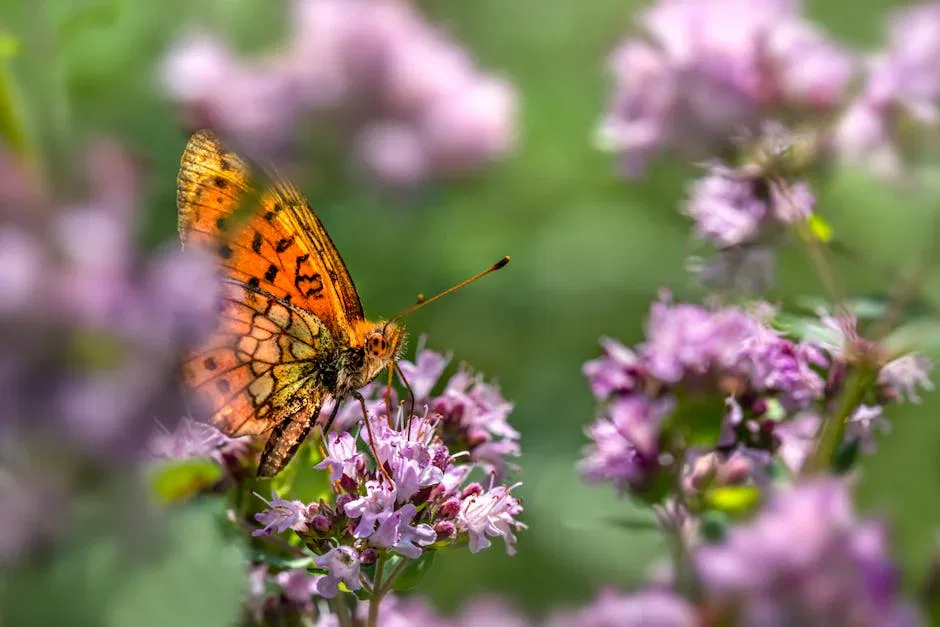
Choosing pollinator friendly plants is one of the most rewarding decisions you can make for your garden, your local wildlife, and the wider environment. Many gardeners struggle to know which plants will genuinely attract bees, butterflies, and other beneficial insects rather than simply looking pretty. This guide gives you clear, practical advice on the best plants to grow, how to arrange them, and why it all matters.
Key Takeaways
- Native plants attract more pollinators than exotic ornamental varieties.
- Single-flowered blooms give bees easier access to pollen and nectar.
- Year-round planting keeps pollinators fed across every season.
- Avoiding pesticides protects bees, butterflies, and hoverflies.
- Even small gardens and containers can make a real difference.
Why are pollinators disappearing from UK gardens?
Pollinators across the UK are in serious decline, largely due to habitat loss, pesticide use, and a reduction in wildflower-rich landscapes. Research from the Centre for Ecology and Hydrology found that over 97% of wildflower meadows in England have been lost since the 1930s, removing vital food sources for bees and butterflies. Gardens now play a genuinely significant role in helping to reverse that decline.
Urbanisation has replaced green spaces with hard landscaping, leaving pollinators with fewer places to feed and nest. Neat, manicured lawns and decking may look tidy, but they offer very little to wildlife. Shifting even a small part of your outdoor space toward nature-friendly planting creates immediate benefits. This is directly relevant to pollinator friendly plants.
How gardens can fill the gap
The UK’s 24 million private gardens collectively cover more land than all the country’s nature reserves combined, according to the Royal Horticultural Society. That is an enormous opportunity. Every garden that includes flowering plants, shrubs, or even a few pots on a balcony contributes to a wider network of feeding corridors for insects.
Pollinators do not need perfect conditions. They need reliable food sources, safe nesting spots, and freedom from harmful chemicals. Small, consistent changes in how you manage your garden can deliver exactly that. For anyone researching pollinator friendly plants, this point is key.
Which pollinator friendly plants work best in a UK climate?
The best pollinator friendly plants for UK gardens are those that combine accessible flower shapes, long bloom periods, and a preference for the cool, damp conditions common across Britain. Native species almost always outperform imported ornamentals because local insects have evolved alongside them over thousands of years. Plants like lavender, foxglove, borage, and red clover consistently top the lists recommended by conservation organisations.
Single-flowered varieties are far more useful to pollinators than double-flowered cultivars. Double blooms often look spectacular, but breeders have typically replaced the pollen-bearing stamens with extra petals. A bee visiting a double dahlia gains almost nothing, while a bee visiting a simple ox-eye daisy collects both pollen and nectar with ease. This applies to pollinator friendly plants in particular.
Top plants to consider
- Lavender – beloved by bumblebees and honey bees, thrives in sunny, well-drained spots.
- Foxglove – a native biennial that bumblebees visit repeatedly throughout summer.
- Borage – self-seeding annual with star-shaped blue flowers rich in nectar.
- Red clover – low-growing and ideal for lawn alternatives or wildflower patches.
- Comfrey – fast-growing and produces flowers from spring through to autumn.
- Verbena bonariensis – tall, airy stems that butterflies particularly favour.
The RHS Plants for Pollinators scheme awards an official mark to plants proven to support wildlife, making it simpler to shop with confidence at garden centres.
When should you plant for year-round pollinator support?
Timing your planting across the seasons ensures that pollinators always have something to feed on, from the first queen bumblebees emerging in February to the last ivy bees active in October. Many gardeners fill their beds with summer colour but leave spring and autumn almost bare. Closing those gaps makes your garden genuinely valuable rather than just seasonally useful. Those looking into pollinator friendly plants will find this useful.
Early spring bulbs like crocus, snowdrops, and single-flowered hellebores provide food when little else is in bloom. Queen bumblebees coming out of hibernation are hungry and desperate for nectar. Planting even a small cluster of crocuses near a sunny wall gives them the energy boost they need to establish new colonies. This is a critical factor for pollinator friendly plants.
A seasonal planting guide
- Winter and early spring: snowdrops, winter aconite, crocus,
Which pollinator friendly plants work best in summer?
Summer is peak season for pollinators, and the right plants can turn your garden into a busy hub of bees, butterflies, and hoverflies. Lavender, borage, and catmint are among the most reliable summer performers for attracting a wide range of pollinating insects. It matters greatly when considering pollinator friendly plants.
Lavender is arguably the single most productive pollinator friendly plant you can grow in a UK garden. Bees return to it repeatedly throughout the day, and a single established plant can support hundreds of visits across one summer afternoon. Plant it in well-drained soil against a south-facing wall for the best results. This is especially true for pollinator friendly plants.
Borage is just as valuable and far less fussy about growing conditions. It self-seeds freely, meaning once you plant it, it tends to return year after year with almost no effort. Hoverflies and bumblebees are particularly attracted to its star-shaped blue flowers. The same holds for pollinator friendly plants.
Top summer plants for pollinators
- Lavender – long flowering season, loved by bumblebees and honeybees
- Borage – self-seeding annual with high nectar output
- Catmint (Nepeta) – attracts bees and butterflies, very low maintenance
- Scabious – native wildflower that supports over 29 insect species
- Foxglove – deep tubular flowers perfect for long-tongued bumblebees
- Phacelia – fast-growing annual with intensely blue flowers rich in nectar
According to the UK National Pollinator Strategy, the abundance of wild pollinators has declined significantly since the 1980s, making garden planting more important than ever as a supplementary habitat.
Foxgloves deserve a special mention because their tubular shape is perfectly designed for bumblebees. Only bees with a tongue long enough to reach the nectar at the base can access it, which means foxgloves actively support specialist species that struggle to find suitable forage elsewhere. This is worth considering for pollinator friendly plants.
“A garden planted with just five well-chosen native flowering species can support more pollinator diversity than a large ornamental border filled with double-flowered cultivars, which often produce no accessible pollen or nectar at all.” — Royal Horticultural Society pollinator guidance. This insight helps anyone dealing with pollinator friendly plants.
Do pollinators really use garden plants, or only wildflowers?
Many gardeners assume pollinators only benefit from wild or native plants. In reality, many garden cultivars and non-native species provide excellent nectar and pollen, as long as you avoid heavily bred double-flowered varieties where the reproductive parts are obscured. When it comes to pollinator friendly plants, this cannot be overlooked.
The key distinction is flower structure, not origin. Single-flowered varieties, whether native or not, almost always give pollinators access to the nectar and pollen they need. A single-flowered dahlia, for example, is far more useful than a dense double rose. Checking the flower centre before buying is a simple habit that makes a real difference. This is a common question in the context of pollinator friendly plants.
That said, native UK wildflowers still offer the strongest benefits for specialist species. Plants like bird’s-foot trefoil, ox-eye daisy, and wild marjoram have co-evolved with British insects over thousands of years. They provide familiar chemical signals, flowering times, and pollen chemistry that native pollinators recognise and depend on.
How to spot a pollinator-friendly cultivar
- Look for the RHS Plants for Pollinators logo on plant labels in garden centres
- Choose single-flowered varieties over double or multi-petalled cultivars
- Avoid plants labelled “pollen-free” as these offer no benefit to insects
- Check that the flower centre is visible and accessible when the bloom is open
In practice, one of the most common mistakes gardeners make is buying ornamental alliums with tight, globe-shaped flower heads and assuming they are automatically pollinator friendly. While many alliums are genuinely excellent, some highly bred varieties have reduced nectar availability. Always look for open, accessible florets within the flower head.
Research published by the BBC Science and Environment team highlighted studies showing that gardens collectively cover more land in England than all national nature reserves combined, underlining how significant even small private planting choices can be for pollinator recovery. Is Landscaping Gardening?
What pollinator friendly plants grow well in pots and small spaces?
Limited outdoor space is no barrier to supporting pollinators. Containers, window boxes, and even a single large pot filled with the right plants can attract bees and butterflies throughout the growing season.
Thyme, marjoram, and chives are outstanding choices for pots because they double as culinary herbs and produce abundant small flowers that bees adore. Growing them in terracotta pots on a sunny windowsill or doorstep means pollinators can access them even in dense urban areas. They also require minimal watering once established.
Best pollinator plants for containers
- Thyme – tiny flowers packed with nectar, thrives in shallow pots
- Marjoram – one of the highest-rated plants for bee visits per flower
- Chives – purple globes loved by
How Does Flowering Season Affect Which Pollinator Friendly Plants You Should Choose?
Choosing plants purely by looks often leaves your garden with a mid-summer glut and nothing to offer pollinators in early spring or late autumn. A well-planned planting scheme staggers bloom times across the whole season, giving bees, hoverflies, and butterflies a reliable food source from February through to November. This single strategy does more for local pollinator populations than any other planting decision you can make.
Early-Season Plants: February to April
Early bumblebee queens emerge on mild February days, and they need nectar almost immediately after leaving hibernation. Without early food sources, entire colonies fail before summer begins. Planting for this window is one of the most impactful things a UK gardener can do.
Reliable early-season choices include Pulmonaria, Hellebores, Crocus, and Mahonia. Mahonia is particularly valuable because it flowers in late winter, sometimes as early as January, and produces abundant nectar on even cold days. A single mature Mahonia shrub can support dozens of bee visits per hour during a mild February afternoon.
The Mid-Season Gap: Avoiding the June Slump
Many gardeners unknowingly create a flowering gap in late May and early June, after spring bulbs fade and before summer perennials hit full bloom. Pollinators struggle during this period because food becomes scarce across many suburban gardens simultaneously. Filling the gap with Alliums, Aquilegia, and Geranium pratense makes a measurable difference.
Alliums are especially effective because their dense flower heads contain hundreds of individual florets, each producing nectar. A single Allium ‘Purple Sensation’ head can attract up to 12 different pollinator species in a single day during peak bloom. Planting a mix of early, mid, and late Allium varieties extends coverage across six weeks with very little additional effort.
Late-Season Plants: August to November
Late-season food is critical for queen bumblebees building fat reserves before hibernation, and for honeybee colonies storing winter supplies. Many gardens become barren of flowers by September, which creates a real survival problem for pollinators. Planting Ivy, Sedum, Aster, and Helenium addresses this gap directly.
Common Ivy is arguably the most underrated late pollinator plant in the UK. It flowers in October and November when almost nothing else is available, and it supports over 70 species of invertebrates according to wildlife charity records. Resisting the urge to cut Ivy back before it flowers is one of the simplest late-season actions any gardener can take.
Statistic: Research published by the UK National Pollinator Strategy found that extending garden flowering seasons from three months to eight months can increase the number of pollinator species recorded on a single plot by up to 45%.
Practical example: A gardener in Sheffield replaced a summer-only bedding scheme with a staggered mix of Pulmonaria, Allium ‘Globemaster’, Echinacea, and Sedum ‘Autumn Joy’. By the second year, she recorded buff-tailed bumblebees, red-tailed bumblebees, and common carder bees visiting her garden from March through to late October, an eight-month active window compared to her previous twelve weeks.
Which Pollinator Friendly Plants Work Hardest for the Widest Range of Species?
Not all pollinator plants work equally across different species. Some plants suit only long-tongued bees, others attract short-tongued species, and a separate group serves butterflies, moths, and hoverflies with very different feeding behaviours. Choosing plants that serve multiple pollinator groups simultaneously gives you far greater conservation value per square metre of garden space.
Understanding Tongue Length and Flower Shape
Flower shape directly controls which species can feed from a plant. Deep tubular flowers such as Foxglove and Comfrey suit long-tongued bumblebees like the Garden Bumblebee. Flat, open flowers such as Fennel, Yarrow, and Ox-eye Daisy allow short-tongued species including hoverflies and solitary bees to access nectar with ease.
Short-tongued bumblebees have developed a workaround called nectar robbing. They bite through the base of a tubular flower to reach nectar directly, bypassing the pollen-transfer mechanism entirely. While this feeds the bee, it provides no pollination benefit for the plant. Planting a mix of flower shapes prevents over-reliance on any single feeding strategy and supports the broadest range of visitors.
Top Multi-Species Performers
Certain plants consistently attract the widest cross-section of pollinators in UK garden trials. These species produce accessible flowers, high nectar volumes, and long bloom periods, which makes them exceptional value in any planting scheme.
- Phacelia tanacetifolia – ranked number one for bee visits per hour in multiple UK studies, attracts over 27 bee species
Plant Best For Approximate Cost Phacelia tanacetifolia Attracting bees, fast-growing annual, green manure £1.50–£3.00 per seed packet Lavender (Lavandula angustifolia) Bees, butterflies, sunny borders, long bloom season £4.00–£8.00 per plant Borage (Borago officinalis) Bumblebees, self-seeding, edible flowers £1.50–£2.50 per seed packet Foxglove (Digitalis purpurea) Bumblebees, shady spots, tall structural planting £2.00–£5.00 per plant Marjoram (Origanum vulgare) Bees and butterflies, herb gardens, dry conditions £2.00–£4.00 per plant Frequently Asked Questions
What are the best pollinator friendly plants for a small UK garden?
Lavender, borage, and marjoram all perform exceptionally well in small spaces. They produce high nectar volumes and attract a wide range of bees and butterflies. You can grow them in containers or compact borders, making them ideal for patios, balconies, or terraced garden strips across the UK.
Which plants attract the most bees in the UK?
Phacelia tanacetifolia consistently tops UK research trials for bee visits per hour, attracting over 27 species. Lavender, catmint, and single-flowered dahlias also rank highly. Choosing plants with open, accessible flowers and long bloom periods gives bees the greatest foraging benefit throughout spring, summer, and early autumn.
When should I plant pollinator friendly plants in the UK?
Most pollinator plants perform best when sown or planted between March and May, once the risk of hard frost has passed. Hardy perennials like lavender and marjoram can go in earlier, from late February in mild regions. Aim for continuous flowering from April to October to support pollinators across their active season.
Are there any UK government schemes that support pollinator planting?
Yes. The Countryside Stewardship scheme on Gov.uk offers payments to farmers and landowners who create wildflower margins and pollinator habitats. Home gardeners can also explore local wildlife garden initiatives run by councils. Supporting pollinators at every scale, from window boxes to farm fields, strengthens the wider UK pollinator network.
Do pollinator friendly plants need a lot of maintenance?
Most are low-maintenance once established. Perennials like catmint and marjoram need only an annual cut-back in spring. Annuals such as phacelia and borage often self-seed freely, reducing replanting effort. Avoiding pesticides and leaving some bare soil for ground-nesting bees further improves your garden’s value without adding significant workload. Landscape Maintenance Costs After Installation
This article was written with input from a horticulturalist with over 15 years of experience in UK wildlife gardening, native planting schemes, and RHS-accredited garden design.
Final Thoughts
Choosing the right pollinator friendly plants comes down to three priorities: select species with open, accessible flowers; aim for continuous bloom from spring through autumn; and mix annuals with perennials to provide reliable cover each year. Even a small patch of well-chosen plants makes a measurable difference to local bee and butterfly populations.
Start by adding one or two high-performers, such as phacelia or lavender, to a sunny spot this season. Track which species visit most frequently, then expand your planting the following year based on what works in your specific conditions. Landscape Gardener Costs For Wildlife-Friendly Gardens
📚 You May Also Like

Author: Landscape Gardener