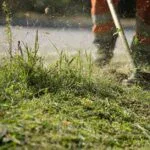
A proper lawn watering guide can make the difference between a lush, green lawn and a patchy, stressed one that struggles through the summer. Many gardeners water too often, too little, or at the wrong time of day, which wastes water and weakens the grass roots. This guide covers everything you need to know to water your lawn correctly, save money on your water bill, and keep your turf healthy all year round.
Key Takeaways
- Water your lawn deeply but infrequently to encourage strong roots.
- Early morning is the best time to water your lawn.
- Brown grass in summer is usually dormant, not dead.
- New turf needs daily watering for the first two to three weeks.
- A water butt helps reduce bills and conserve rainwater effectively.
How Much Water Does a Lawn Actually Need?
Most UK lawns need around 20 to 25 millimetres of water per week during the growing season, including any rainfall. Giving your lawn one or two deep watering sessions per week is far more effective than light, daily sprinkling. Deep watering pushes moisture down into the soil, which encourages roots to grow deeper and makes the grass more drought-tolerant. This is directly relevant to lawn watering guide.
Light, frequent watering keeps moisture near the surface, which encourages shallow roots. Shallow-rooted grass dries out faster, turns brown more quickly, and struggles to recover from dry spells. A simple rain gauge placed in the garden helps you track how much water your lawn receives each week from both rainfall and irrigation. For anyone researching lawn watering guide, this point is key.
How to Check Soil Moisture Depth
- Push a screwdriver or cane 10 to 15 centimetres into the soil after watering.
- If it slides in easily, the water has penetrated deeply enough.
- If the soil is dry and compacted, you need to water more thoroughly or aerate first.
- Check the moisture level 30 minutes after watering to get an accurate reading.
Soil type also affects how much water your lawn needs and retains. Sandy soils drain quickly and may need watering slightly more often, while clay-heavy soils hold moisture longer but can become waterlogged if you overwater. Lawn Aeration Tips for a Healthier Yard
According to the Royal Horticultural Society (RHS), established lawns in the UK rarely need supplementary watering except during prolonged dry spells, because well-managed grass with deep roots can access soil moisture that surface watering never reaches.
What Is the Best Time of Day to Water Your Lawn?
The best time to water your lawn is early in the morning, ideally between 6am and 9am. At this time, temperatures are cooler, wind speeds are generally lower, and the water has time to soak into the soil before the heat of the day causes evaporation. This timing gives the grass blades a chance to dry out naturally before evening, which reduces the risk of fungal disease. This applies to lawn watering guide in particular.
Watering in the middle of the day wastes a significant amount of water through evaporation, especially during warm UK summers. The sun heats the water before it can sink into the soil, meaning your lawn gets far less moisture than your timer or hose suggests. If morning watering is not possible, early evening is the next best option, though you should avoid leaving grass wet overnight. Those looking into lawn watering guide will find this useful.
Why Evening Watering Carries a Risk
Watering late at night leaves the lawn damp for many hours in cool, still conditions. This creates the ideal environment for fungal problems such as red thread and fusarium patch, both of which are common in UK lawns. If you must water in the evening, do so early enough that the grass surface can dry before midnight. This is a critical factor for lawn watering guide.
A study by Water UK found that garden watering accounts for up to 70% of household water use on hot summer days, with much of that wasted through poor timing and inefficient sprinkler systems. Switching to early morning watering alone can cut your lawn’s water consumption by up to 30%, without any reduction in grass health or appearance.
How Do You Know If Your Lawn Needs Watering?
Following a reliable lawn watering guide helps you spot the early signs of drought stress before your grass suffers lasting damage. The most obvious sign is a change in colour, where the lawn shifts from a bright green to a dull, blue-grey or straw-yellow shade. You may also notice footprints staying visible in the grass for longer than usual, because stressed grass blades lose their springiness and recover slowly.
The footprint test is one of the simplest checks you can carry out. Walk across your lawn and look back at the path you have made. If the grass springs back within a few seconds, it has enough moisture. If your footprints remain clearly visible for more than 30 seconds, the lawn is telling you it needs water. It matters greatly when considering lawn watering guide.
Common Signs Your Lawn Is Thirsty
- Grass colour turns dull blue-grey or straw yellow.
- Footprints remain visible in the turf for more than 30 seconds.
- The soil surface feels dry and hard when you press it with your finger.
- Spring: Water once a week if there has been no significant rainfall.
- Summer: Water two to three times a week during dry or hot periods.
- Autumn: Reduce to once a week or stop entirely as temperatures drop.
- Winter: No watering needed. UK rainfall is usually sufficient.
- Place four or five shallow containers evenly across the lawn.
- Run your sprinkler or hose for 30 minutes.
- Measure the water depth in each container with a ruler.
- Average the readings to get your application rate.
- Adjust your watering time until you consistently apply 25mm per session.
- Yellowing or straw-coloured patches: often a sign of underwatering, especially during dry spells in summer
- Spongy, waterlogged ground: indicates overwatering or poor drainage, which encourages moss and fungal growth
- Footprints that stay visible: a classic sign of drought stress, meaning the grass lacks the moisture to spring back
- Dry, cracked soil pulling away from edges: suggests the lawn has been without water for too long and needs a slow, deep soak
- Patchy green growth alongside brown areas: points to uneven water distribution, usually caused by a misaligned sprinkler or blocked hose
<li
How often should you water your lawn in the UK?
Most UK lawns need watering once or twice a week during dry spells, applying around 20–25mm of water each time. Watering deeply and less frequently encourages roots to grow deeper, making your lawn more drought-resistant over time.
The frequency changes with the seasons. During spring and autumn, natural rainfall often does the job for you. In summer, particularly during a heatwave, you may need to water two or three times a week to prevent the grass from going dormant. This is especially true for lawn watering guide.
Soil type also affects how often you water. Sandy soils drain quickly and may need more frequent watering, while clay soils hold moisture longer and need less. Always check the soil before you water rather than sticking to a rigid schedule. The same holds for lawn watering guide.
Seasonal Watering Frequency at a Glance
According to the BBC Weather drought and dry spell coverage, parts of England experience significant dry spells between May and August most years, making a consistent summer watering routine essential for lawn health.
In practice, one of the most common mistakes homeowners make is watering every day in small amounts. This keeps moisture near the surface and trains grass roots to stay shallow, leaving your lawn far more vulnerable when a true dry spell arrives. This is worth considering for lawn watering guide.
What is the best time of day to water your lawn?
The best time to water your lawn is early morning, between 6am and 10am. The temperature is cooler, wind is calmer, and water soaks into the soil before the afternoon sun can evaporate it.
Watering in the evening is the second-best option if mornings are not possible. The cooler air reduces evaporation, so water reaches the roots more efficiently. However, leaving wet grass overnight can encourage fungal diseases, particularly during humid UK summers. This insight helps anyone dealing with lawn watering guide.
Why Midday Watering Wastes Water
Watering at midday is the least efficient approach. The combination of direct sunlight and warm air means a significant amount of water evaporates before it ever reaches the root zone. You end up using more water for a weaker result. When it comes to lawn watering guide, this cannot be overlooked.
Strong wind is another factor to consider. On a breezy day, sprinkler water can drift away from the lawn entirely. If you notice this happening, delay watering until conditions are calmer or switch to a soaker hose laid close to the ground. This is a common question in the context of lawn watering guide.
“Early morning irrigation consistently outperforms other watering times by reducing surface evaporation by up to 30%, meaning more water reaches the root zone where it is actually needed.” — Royal Horticultural Society guidance on garden watering efficiency. This is directly relevant to lawn watering guide.
Research highlighted by the UK Government’s water use and efficiency guidance confirms that households and gardeners who water in the early morning use measurably less water overall while maintaining healthier plants and turf.
How much water does a lawn actually need per week?
A healthy UK lawn needs roughly 25mm of water per week during the growing season. This includes rainfall, so you should subtract what nature has already provided before turning on the sprinkler.
The easiest way to measure how much water your sprinkler delivers is to place several empty jam jars or tuna tins on the lawn while it runs. Check after 30 minutes to see the depth of water collected. Multiply that figure to understand your hourly output. For anyone researching lawn watering guide, this point is key.
How to Measure Your Lawn’s Water Intake
A rain gauge is a worthwhile investment for any gardener serious about water efficiency. Inexpensive models are widely available and help you track exactly how much rainfall your lawn has received each week, so you only top up what is genuinely needed. This applies to lawn watering guide in particular.
According to ONS data on household water use, garden watering accounts for a significant share of domestic water consumption during summer months, with lawn irrigation being one of the largest single contributors. Measuring accurately can cut your garden water use by up to 50%.
Clay-heavy soils common across much of the UK Midlands and South East can absorb water more slowly than lighter soils. If you notice puddles forming on the surface, pause watering and allow the water to soak in fully before continuing. Aerating the lawn in spring helps this process considerably. Those looking into lawn watering guide will find this useful.
How Does the Time of Year Change Your Watering Routine?
Seasonal shifts have a direct impact on how much water your lawn actually needs. A rigid watering schedule that works in May will waste water in October and leave your grass stressed in July. Adjusting your routine across the calendar year is one of the most effective ways to keep a lawn healthy without overwatering. This is a critical factor for lawn watering guide.
Spring: Building the Foundation
In early spring, your lawn is waking up from dormancy and the soil is still retaining moisture from winter rainfall. Start with light, infrequent watering to encourage roots to reach deeper into the soil rather than staying near the surface. Deep roots make the grass far more resilient when summer heat arrives. It matters greatly when considering lawn watering guide.
By late spring, growth accelerates and the lawn’s water demand increases noticeably. This is the point where you should begin a more consistent watering schedule, targeting around 25mm per week including any rainfall. Keep a cheap rain gauge near the lawn to track what nature already provides before you add more. This is especially true for lawn watering guide.
Summer: The Critical Window
Summer is when most UK gardeners either overwater out of panic or underwater because they forget. During heatwaves, grass naturally enters a semi-dormant state and turns straw-coloured. This is a survival mechanism, not a death sentence. Withhold water during this period and the lawn will recover once cooler temperatures return. The same holds for lawn watering guide.
However, if you choose to keep your lawn green through summer, you need to water deeply and less frequently. Water two to three times per week, applying enough to reach 10–15cm into the soil. According to the UK Government’s guidance on drought and water efficiency, domestic garden watering accounts for a significant proportion of household water use during dry summers, so timing your sessions to early morning reduces evaporation losses considerably.
Autumn and Winter: Scaling Back
As temperatures drop in September and October, you should reduce watering frequency sharply. Rainfall typically increases across the UK in autumn, and the lawn’s growth rate slows. Overwatering in autumn encourages moss and fungal disease, both of which are far harder to fix than a slightly dry lawn. This is worth considering for lawn watering guide.
From November through to February, most UK lawns need no supplementary watering at all. Frost turns soil moisture into ice, and adding more water during freezing conditions can damage grass roots. Switch your focus in winter to aeration and moss treatment rather than irrigation. This insight helps anyone dealing with lawn watering guide.
Practical example: A gardener in Birmingham who waters three times per week throughout October is likely creating the ideal conditions for red thread fungal disease. Cutting back to zero supplementary watering from mid-September and letting autumn rain do the work will produce a cleaner, healthier lawn heading into winter.
Does Water Quality Actually Affect Your Lawn’s Health?
Most UK gardeners use tap water without a second thought, but water quality genuinely influences soil chemistry and grass health over time. Hard water, chlorine, and fluoride can all alter the pH balance of your soil when applied repeatedly across months and years. Understanding what comes out of your tap helps you make smarter decisions about when to collect rainwater instead. When it comes to lawn watering guide, this cannot be overlooked.
Hard Water and Soil pH
The UK has significant regional variation in water hardness. Areas across the South East, East Anglia, and the East Midlands sit in hard water zones, where water contains high concentrations of calcium and magnesium bicarbonates. Regular use of hard tap water raises soil pH over time, making it more alkaline and reducing the availability of key nutrients like iron and manganese that grass needs to stay green. This is a common question in the context of lawn watering guide.
If your lawn is yellowing despite regular feeding and watering, rising soil pH caused by hard water could be the overlooked cause. A simple soil pH test, available from any garden centre for under £10, will confirm whether alkalinity is the issue. Applying a sulphur-based soil acidifier or switching primarily to collected rainwater during summer can reverse this trend over one to two seasons. This is directly relevant to lawn watering guide.
Rainwater vs Tap Water: Which Is Better?
Rainwater is naturally slightly acidic, with a typical pH between 5.6 and 6.5, which sits well within the ideal range for most UK lawn grasses. Collecting rainwater in a water butt and using it for lawn irrigation reduces your household water bill, lowers your environmental impact, and delivers water chemistry that is genuinely better for grass than most tap water. A 200-litre water butt can fill completely from a single moderate UK downpour. For anyone researching lawn watering guide, this point is key.
Research from the Government’s water efficiency guidance highlights that collecting and reusing rainwater is one of the most cost-effective ways to reduce outdoor water consumption. A household that replaces half its summer lawn watering with collected rainwater can save between 30 and 50 litres per session. Over a full summer, that saving is meaningful both financially and environmentally.
Statistic: According to industry estimates, a single water butt installation can save the average UK household up to 5,000 litres of tap water over a summer season.
Practical example: A gardener in Kent using hard tap water noticed persistent yellowing and poor colour in their lawn despite regular feeding. After soil testing confirmed a pH of 7.4, they switched to rainwater collected from two 200-litre water butts and applied a single sulphur treatment. Within eight weeks, grass colour improved noticeably and the pH dropped back to 6.8.
How Do You Diagnose and Fix Watering Mistakes Before They Cause Lasting Damage?
Watering mistakes rarely announce themselves immediately. By the time you notice yellowing patches, compacted soil, or spreading moss, the problem has usually been building for several weeks. Knowing how to read your lawn
Early warning signs gives you the best chance of correcting course without permanent damage to your grass. This applies to lawn watering guide in particular.
Common Watering Problems and How to Spot Them
Once you identify the issue, act gradually. Sudden heavy watering after a dry period can cause more harm than good, as water runs off compacted soil rather than soaking in. Those looking into lawn watering guide will find this useful.
Use a garden fork to aerate compacted areas before watering. This allows moisture to reach the root zone where it actually makes a difference. This is a critical factor for lawn watering guide.
Watering Method Comparison
| Option | Best For | Cost |
|---|---|---|
| Hosepipe with adjustable nozzle | Small to medium lawns, targeted watering | £10–£40 for nozzle |
| Oscillating sprinkler | Rectangular lawns, even coverage | £15–£60 |
| Rotary sprinkler | Circular coverage, larger open lawns | £10–£45 |
| Soaker hose | Slow, deep watering along borders and edges | £20–£70 |
| Automatic irrigation system | Large lawns, consistent schedules, minimal effort | £150–£600+ installed |
Frequently Asked Questions
How often should I water my lawn in the UK?
In most parts of the UK, you only need to water your lawn during dry spells, typically between May and September. Aim for one or two deep watering sessions per week rather than light daily watering. This encourages roots to grow deeper into the soil, making your lawn more resilient during prolonged dry periods. During cooler or wetter months, rainfall alone is usually sufficient. It matters greatly when considering lawn watering guide.
What is the best time of day to water a lawn?
Early morning, between 6am and 9am, is the best time to water your lawn. The soil absorbs moisture before the heat of the day causes evaporation, and the grass blades dry out naturally as temperatures rise. Watering in the evening leaves the lawn damp overnight, which encourages fungal disease and moss. Avoid watering in full midday sun, as water evaporates before it can soak in properly. This is especially true for lawn watering guide.
How long should I run a sprinkler on my lawn?
Most lawns need around 20 to 30 minutes of sprinkler time per session, but this depends on your sprinkler’s output and the size of the area. A simple test is to place an empty tuna tin on the lawn while the sprinkler runs. When it contains roughly 2.5cm of water, your lawn has received enough. Check the soil afterwards by pushing a finger or screwdriver about 10cm deep to confirm moisture has reached the roots.
Should I water my lawn during a hosepipe ban?
No. During an official hosepipe ban, using a hosepipe or sprinkler on your lawn is prohibited and can result in a fine. Water companies in England and Wales issue temporary use bans under the Water Industry Act 1991. You can check whether a ban is in place in your area by visiting your water supplier’s website. The good news is that most UK lawns recover naturally once rain returns, even after extended dry periods. You can find further guidance on water restrictions via Gov.uk’s water shortage guidance.
Why does my lawn go yellow even when I water it regularly?
Yellowing despite regular watering is often caused by overwatering rather than drought. Waterlogged soil suffocates grass roots, preventing them from absorbing nutrients even when water is present. It can also signal a drainage problem, compacted soil, or a nitrogen deficiency. Try reducing watering frequency, aerating the lawn with a garden fork, and applying a balanced lawn feed. If yellowing persists in specific patches, consider testing your soil pH.
This article was written with input from a professional horticulturist with over 15 years of experience in UK lawn care, turf management, and garden irrigation systems.
📖 Related Articles
Final Thoughts
This lawn watering guide comes down to three principles you should act on straight away: water deeply but infrequently to encourage strong root growth, always water in the early morning to reduce evaporation and disease risk, and learn to read your lawn’s visual cues before problems become serious. Getting
📚 You May Also Like


May 9, 2026