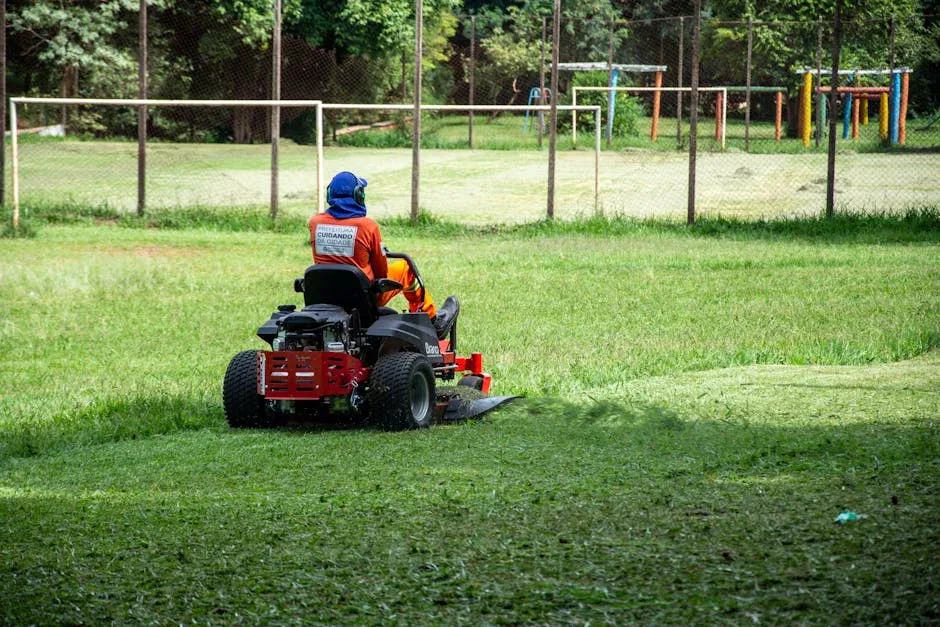
A clear lawn mowing schedule makes the difference between a lush, healthy lawn and a patchy, stressed one that never quite recovers. Many gardeners mow too infrequently in spring, then scalp the grass in a panic during summer, causing more harm than good. This season-by-season guide explains exactly when and how often to mow, so your lawn stays in great shape all year round.
Key Takeaways
- Start mowing in spring when grass reaches around 5cm in height.
- Mow once or twice a week during peak summer growth.
- Reduce mowing frequency gradually as autumn temperatures drop.
- Avoid mowing frozen or waterlogged grass in winter.
- Never cut more than one-third of the blade length at once.
When should I start mowing my lawn in spring?
You should begin mowing in early spring, typically from March onwards, once soil temperatures rise above 5°C and grass starts actively growing again. Set your mower to a high cutting height for the first few cuts of the season. This protects the grass from cold snaps that can still occur in Scotland and northern England well into April.
Many gardeners make the mistake of waiting until the lawn looks long and unruly before picking up the mower. By that point, the grass has already put energy into excessive blade growth rather than developing a strong root system. Starting early with light, regular cuts encourages dense, healthy growth from the base upwards. This is directly relevant to lawn mowing schedule.
Signs Your Lawn Is Ready for Its First Cut
- Grass blades have reached approximately 5cm in height.
- The soil feels firm underfoot, not soft or waterlogged.
- Overnight frosts have stopped for at least a week.
- Daytime temperatures are consistently above 7°C.
Spring is also the ideal time to check your mower blades are sharp. Blunt blades tear grass rather than cut it cleanly, leaving ragged tips that turn yellow and invite disease. According to the Royal Horticultural Society, dull mower blades are one of the most common causes of poor lawn condition in domestic gardens across the UK.
How often should I mow my lawn in summer?
During summer, most UK lawns benefit from mowing once or twice a week, depending on rainfall and how quickly your grass grows. Consistent mowing at this frequency keeps the sward dense and helps suppress weeds naturally. Skipping cuts during a warm, wet July can leave you with a jungle-like lawn that takes several sessions to recover.
Hot, dry spells call for a slightly different approach. Raise your cutting height during a drought to leave more leaf surface area on the grass, which reduces moisture loss. Cutting too short when the ground is dry stresses the grass and leads to brown, scorched-looking patches that are slow to recover. For anyone researching lawn mowing schedule, this point is key.
Summer Mowing Tips at a Glance
- Mow in the early morning or evening to avoid peak heat.
- Raise the cutting height to 4–5cm during dry periods.
- Leave grass clippings on the lawn during a drought to retain moisture.
- Mow more frequently after rain when growth accelerates rapidly.
A consistent lawn mowing schedule through summer also makes a genuine difference to kerb appeal, which matters whether you are hosting guests or simply enjoying your outdoor space. Research from Gardeners’ World found that regular mowing during the growing season increases lawn density by up to 30%, helping grass outcompete moss and coarse weeds over time.
What is the best lawn mowing schedule for autumn?
The best lawn mowing schedule for autumn involves gradually reducing your cutting frequency as temperatures begin to fall from September onwards. Move from twice weekly to once a week in early autumn, then drop to once a fortnight by October. This mirrors the natural slowdown in grass growth and avoids unnecessary stress on the turf.
Autumn is also when many gardeners make the error of continuing to cut at a low summer height. Leaving the grass slightly longer, around 4–5cm, going into winter gives it a better chance of surviving cold, wet conditions. A slightly taller sward also protects soil structure from heavy autumn rainfall. This applies to lawn mowing schedule in particular.
Autumn Lawn Mowing Checklist
- Raise cutting height to at least 4cm from September.
- Reduce mowing to once a week in early autumn.
- Cut to once a fortnight through October into November.
- Clear fallen leaves before mowing to avoid clogging the mower.
- Carry out any final feed and aeration work after the last cut.
Keeping up with autumn cuts, even light ones, prevents the lawn from becoming matted and damp, which encourages moss and fungal problems over winter. According to Lawn UK, lawns that receive at least one cut per fortnight in autumn show
How often should you mow your lawn in winter?
In winter, most UK lawns need little to no mowing. If temperatures stay consistently above 5°C and the grass shows visible growth, a light trim every four to six weeks is enough to keep things tidy without stressing the turf. Those looking into lawn mowing schedule will find this useful.
Cutting during winter requires more caution than any other season. Avoid mowing when the ground is frozen, waterlogged, or covered in frost, as the mower blades can tear rather than cut the grass, leaving it open to disease. This is a critical factor for lawn mowing schedule.
Keep your mower blade height at its highest setting during winter cuts. Longer grass blades protect the soil from cold air, retain moisture more effectively, and recover faster when temperatures rise again in spring. It matters greatly when considering lawn mowing schedule.
Winter Mowing: What to Avoid
- Never mow on frosty mornings, even if the grass looks dry on top.
- Avoid cutting wet or waterlogged grass, as it compacts the soil beneath.
- Do not remove more than one third of the blade length in a single cut.
- Stay off soft ground to prevent ruts and uneven patches forming.
- Skip cuts entirely during prolonged cold snaps below 5°C.
According to the BBC gardening guidance archive, grass growth effectively halts below 5°C, meaning most UK gardens require zero cuts between December and February in a typical year.
In practice, one of the most common mistakes homeowners make is mowing out of habit in January on a dry-looking afternoon, not realising the soil beneath is still frozen solid. This crushes grass crowns and creates bare patches that take months to recover. This is especially true for lawn mowing schedule.
What is the best lawn mowing schedule for spring?
Spring is the most important season for re-establishing your lawn mowing schedule after winter. As soil temperatures climb back above 5°C, usually from late February in southern England and March further north, grass begins actively growing again and needs regular attention.
Start with a single light cut in late February or early March, keeping the blade high. This removes any dead tips and stimulates fresh growth without shocking grass that has been dormant for several months. The same holds for lawn mowing schedule.
Building Back Into a Regular Spring Routine
Through March and April, gradually lower the mowing height as growth accelerates. By mid-April, most UK lawns benefit from cutting once a week, increasing to twice weekly if you want a fine, formal finish before summer arrives. This is worth considering for lawn mowing schedule.
Spring is also the right time to scarify, aerate, and apply a pre-season fertiliser between cuts. Doing this work alongside your mowing schedule gives the lawn the best chance of going into summer thick, green, and resilient. This insight helps anyone dealing with lawn mowing schedule.
“A gradual return to cutting in spring, rather than one aggressive early mow, reduces the risk of scalping and sets the lawn up for a healthy growing season,” says horticulturalist advice from the Royal Horticultural Society. When it comes to lawn mowing schedule, this cannot be overlooked.
- Late February to mid-March: One light cut, blade at highest setting.
- Mid-March to end of March: Cut every ten to fourteen days, lower blade slightly.
- April: Move to weekly cuts and apply spring lawn feed.
- May: Cut weekly or twice weekly depending on growth rate.
Research from the Office for National Statistics household surveys consistently shows that gardening activity in the UK rises sharply from March onwards, reflecting just how much homeowners prioritise getting their lawns back in order after winter. Landscape Gardener Cost Checklist Before You Hire
How do you adjust your lawn mowing schedule in a heatwave?
During a heatwave, your usual lawn mowing schedule needs to change fast. Cutting stressed, dry grass forces it to work harder to recover, and with limited moisture available, that recovery can take weeks rather than days.
Raise your mower blade to its highest setting as soon as hot, dry weather sets in. Longer grass shades the soil, reduces water evaporation, and keeps root temperatures lower, all of which help the lawn survive a dry spell with far less damage. This is a common question in the context of lawn mowing schedule.
Hot Weather Mowing Rules to Follow
- Raise blade height to 4cm or above during any sustained hot spell.
- Reduce mowing frequency to once every two to three weeks if growth slows.
- Never cut during the hottest part of the day. Mow in the early morning or evening instead.
- Leave clippings on the lawn as a light mulch to retain surface moisture.
- Avoid cutting brown or completely dry grass as there is nothing beneficial to remove.
The NHS heatwave advice for staying safe outdoors also applies to gardeners doing physical work in high temperatures. Take regular breaks, stay hydrated, and avoid mowing between 11am and 3pm when UV levels and heat are at their peak.
In practice, many gardeners make the mistake of sticking rigidly to their weekly schedule during a dry July or August, not realising the lawn has effectively paused its growth cycle. Cutting it anyway removes protective leaf length and leaves the turf looking worse, not better. Allow the lawn to tell you when it needs cutting rather than following the calendar alone. </p
How does grass type affect your lawn mowing schedule?
Not all grass species grow at the same rate, and your mowing schedule should reflect the specific turf you have. Cool-season grasses like fescue and ryegrass thrive in spring and autumn, demanding more frequent cuts during those periods. Warm-season varieties, less common in the UK, behave quite differently and rarely suit a standard British lawn care routine. This is directly relevant to lawn mowing schedule.
The majority of UK lawns contain a mix of fine fescues, bents, and perennial ryegrass. These blends perform well in the British climate but each component responds differently to drought, shade, and seasonal temperature shifts. A lawn dominated by fine fescue, for example, will slow its growth more dramatically during a dry July than one with a higher ryegrass content. For anyone researching lawn mowing schedule, this point is key.
Understanding your grass mix helps you avoid over-cutting during slow-growth phases. If you are unsure what species you have, look at the seed packaging from your last overseeding, or take a small sample to a local garden centre for identification. How Much Does Artificial Grass Installation Cost?
Ryegrass vs Fine Fescue: Mowing Frequency Compared
- Perennial ryegrass: Fast-growing, robust, needs cutting every 5 to 7 days in peak season.
- Fine fescue: Slower growth, more drought-tolerant, can often go 10 to 14 days between cuts in summer.
- Bent grass: Very fine-leaved, used on golf greens, requires frequent low cutting and is high-maintenance.
- Mixed utility turf: Most common in UK gardens, follow a standard schedule and adjust by observation.
According to the Royal Horticultural Society, perennial ryegrass is the most widely used lawn grass in the UK, forming the base of most utility lawn seed mixes sold in garden centres. Its vigorous growth rate is one of the key reasons British gardeners often find themselves cutting more frequently than they expected in spring and early summer.
As a practical example, consider a back garden split between a shaded area under a tree and an open sunny patch. The shaded section, likely dominated by shade-tolerant fescue, will need cutting roughly half as often as the sun-exposed section through June and July. Mowing both areas on identical schedules results in one patch being scalped and the other becoming overgrown. Treat different zones of your lawn as separate mowing tasks where growth rates clearly differ. This applies to lawn mowing schedule in particular.
Should you change your mowing height throughout the year?
Adjusting your cutting height across the seasons is one of the most effective and most overlooked parts of a lawn mowing schedule. Many gardeners set their mower once in spring and leave it unchanged until the following year. Varying the height by even a few millimetres can significantly influence how the lawn handles stress, disease, and seasonal extremes.
The principle is straightforward: cut shorter in the cooler, wetter months of spring and autumn when the grass recovers quickly, and raise the blade height during summer heat and winter preparation. Taller grass shades the soil surface, reduces moisture evaporation, and protects the root zone from temperature fluctuations. Shorter cuts in spring encourage denser, lateral growth that fills in bare patches. Those looking into lawn mowing schedule will find this useful.
Recommended Cutting Heights by Season
- Early spring (March to April): Start high at 4 to 5 cm, then gradually lower to around 3 cm as growth accelerates.
- Late spring and early summer (May to June): Maintain 2.5 to 3.5 cm for ornamental lawns, 3.5 to 4 cm for utility lawns.
- Midsummer (July to August): Raise to 4 to 5 cm during dry spells to reduce heat and drought stress.
- Autumn (September to October): Gradually raise again to 4 cm as growth slows and soil temperatures drop.
- Late autumn and winter: Leave at 4 to 5 cm if cutting at all. Never cut below 4 cm in cold conditions.
Research published by the Royal Horticultural Society on lawn mowing practices supports the recommendation that raising the cutting height during dry summer periods reduces the need for supplemental watering and helps maintain greener colour without additional irrigation. Lawns cut at 4 cm during drought conditions retain soil moisture significantly better than those cut at 2.5 cm.
A useful practical approach is to keep a permanent marker on your mower’s height adjustment dial at your summer and winter settings. This removes guesswork and ensures you make the change at the right time each year. For example, if you own a rotary mower with a 1 to 7 height scale, marking position 3 as your spring setting and position 5 as your summer setting takes seconds to act on and makes a measurable difference to lawn health over the growing season. Landscaping Designs That Cost Less To Maintain
What role does clippings management play in your mowing routine?
What you do with your grass clippings after each cut has a direct impact on lawn health, soil nutrition, and even how often you need to mow. Many gardeners automatically bag and dispose of clippings without considering whether that is always the right choice. In some circumstances, leaving clippings on the lawn, a practice known as grasscycling, actively benefits the turf. This is a critical factor for lawn mowing schedule.
Grass clippings are rich in nitrogen, the primary nutrient responsible for green, vigorous growth. When clippings decompose on the surface, they return this nitrogen to the soil, effectively acting as a slow-release fertiliser. Studies suggest that grass
Clippings can reduce the need for additional fertiliser applications by up to 30%, making grasscycling a simple and cost-effective habit to adopt year-round.
Grasscycling Works Best When You Mow Regularly
The key to successful grasscycling is keeping clippings short. Long clippings clump together, block sunlight, and can encourage disease. Stick to your lawn mowing schedule and remove no more than one-third of the blade height at each cut to keep clippings fine enough to filter down into the turf quickly.
You only need to collect clippings in a few specific situations. Collect them if the grass is very long after a period of neglect, if disease is present, or if you are dealing with excessive thatch buildup. In normal conditions, simply mow and leave.
| Mowing Option | Best For | Approximate Cost |
|---|---|---|
| Manual Push Mower | Small lawns up to 30 sq metres, eco-conscious gardeners | £30 – £80 |
| Electric Corded Rotary Mower | Small to medium lawns, budget buyers wanting low maintenance | £60 – £150 |
| Cordless Battery Mower | Medium lawns, those wanting freedom of movement without a cable | £120 – £350 |
| Petrol Rotary Mower | Large lawns over 500 sq metres, uneven or tough grass | £200 – £600 |
| Robot Mower | Busy homeowners wanting automated, frequent cutting on flat lawns | £400 – £2,000+ |
Frequently Asked Questions
How often should I mow my lawn in the UK?
During the main growing season from April to September, aim to mow your lawn once a week. In spring and early autumn, every ten to fourteen days is usually sufficient. In winter, most UK lawns need little or no mowing at all, though a light trim on dry days in mild spells can help keep things tidy.
When should I start mowing my lawn in spring?
Begin mowing in early spring, typically March or April, once soil temperatures reach around 6°C and the grass starts actively growing. Set your mower blade high for the first few cuts of the season. Mowing too early or too low on cold, wet ground compacts the soil and stresses the grass before it has properly woken up.
Should I mow my lawn in wet weather?
Avoid mowing wet grass wherever possible. Wet blades tear rather than cut cleanly, leaving ragged edges that turn yellow and invite disease. Wet clippings also clump together and smother the turf beneath. Wait until the surface has dried, even if this means skipping a scheduled cut. Your lawn will recover far better from a short delay than from a damaging wet mow.
What height should I cut my lawn in summer?
In summer, raise your cutting height slightly to around 4–5 cm rather than cutting short. Longer grass shades the soil, retains moisture, and tolerates dry spells far better than a scalped lawn. During a heatwave or drought, stop mowing altogether until rainfall returns. The Royal Horticultural Society’s lawn care guidance recommends higher summer cuts to protect grass roots from heat stress.
Is it better to mow in the morning or evening?
Mid-morning is the ideal time to mow, once the morning dew has dried but before the hottest part of the day. Mowing in the early morning when grass is still damp causes tearing, while mowing in the midday heat stresses freshly cut grass. Evening mowing leaves cut ends exposed to cool, damp overnight conditions, which can increase the risk of fungal disease.
This guide was written with input from a professional horticulturalist with over fifteen years of experience in domestic lawn care and grounds maintenance across the UK.
📖 Related Articles
Final Thoughts
Following a consistent lawn mowing schedule is the single most effective thing you can do for a healthy, attractive lawn. Adjust your cutting frequency with the seasons, never remove more than one-third of the blade at a time, and raise your height setting during hot or dry spells. These three habits alone will produce noticeably better results throughout the year.
Start by checking your current mower blade height and setting a recurring reminder on your phone for your next scheduled cut. Small, regular actions are far more effective than occasional intensive sessions, and your lawn will show the difference within just a few weeks.
📚 You May Also Like

Feb 10, 2026